
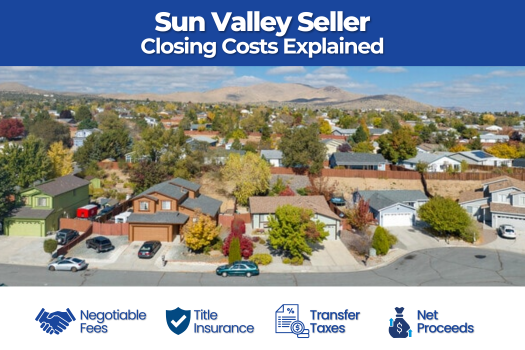
Sun Valley Home Seller Fees & Closing Costs Explained

Thinking about selling and Googling Sun Valley closing costs seller because you want a clear, honest breakdown of closing costs before you list? You’re not alone. Closing costs can feel confusing because they’re made up of many smaller fees, plus a few bigger items, and some costs depend on what you negotiate in the contract.
Near the start of the process, Cassie Craig and Paul Dunham with Craig Team Realty help Sun Valley, Nevada homeowners understand what sellers commonly pay at closing, what usually falls on the buyer, and what can change based on your home, your timeline, and your offer terms.
What “Closing Costs” Means for a Sun Valley Seller
Closing costs are the charges and credits that show up on the final settlement statement when your home transfers to the buyer. In Sun Valley (Washoe County), many of these costs are handled through the title/escrow company at closing.
Important: Nothing in this guide is a “one-size-fits-all” quote. Final fees depend on the purchase agreement, the service providers used, your property type, and your payoff details. For tax or legal questions, it’s smart to speak with a qualified professional.
The Big Buckets of Sun Valley Seller Closing Costs
Most seller closing costs in Sun Valley fall into these categories:
- Real estate brokerage compensation (as agreed to in writing)
- Title and escrow charges (including title insurance and settlement fees)
- Government recording and transfer charges (including Washoe County transfer tax)
- Prorations and payoffs (property taxes, HOA dues, mortgage payoff, etc.)
- Negotiated credits (repairs, buyer closing cost credits, warranties, and more)
Brokerage compensation (Negotiable & Written)
For many sellers, the largest single line item is compensation paid to real estate professionals. This amount is negotiable and is agreed to in writing before your home hits the market. It can be structured in different ways depending on your listing agreement and the terms of the sale.
What that compensation typically supports (especially if you want top dollar and a smoother escrow):
- Pricing strategy based on Sun Valley buyer demand and comparable sales
- Home preparation plan (repairs, cleaning, staging guidance, photos)
- Marketing distribution (online exposure, agent outreach, showing strategy)
- Offer review and negotiation (price, terms, timing, credits)
- Transaction management through appraisal, inspections, title, and closing
Tip: When comparing options, focus on your net outcome (price, terms, timeline, risk), not just one fee. A strong strategy can reduce price reductions and protect proceeds.
2) Title Insurance: What Sellers Often Pay in Nevada
Title insurance helps protect against certain ownership and lien issues. There are usually two policies involved:
- Owner’s policy (protects the buyer)
- Lender’s policy (protects the buyer’s lender, if the buyer has a loan)
In Nevada, it is common for the seller to pay for the owner’s title policy (the buyer’s protection) while the buyer pays for the lender’s policy—but the purchase agreement can change that. Always confirm what your contract says before assuming who pays what.
3) Escrow (Settlement) Fees
Escrow is the neutral process that handles documents, funds, payoffs, and recording. Escrow fees are often split between buyer and seller in Nevada, but they can be negotiated.
Escrow services may include:
- Coordinating signatures and required paperwork
- Ordering payoff demands and HOA documents
- Preparing settlement statements
- Receiving and disbursing funds
- Recording the deed and closing out the file
4) Washoe County Real Property Transfer Tax (RPTT)
This is one of the most misunderstood costs. Nevada collects a Real Property Transfer Tax when deeds are recorded, and Washoe County has a published rate for it.
Washoe County rate: $2.05 per $500 of value (or fraction of $500) on transfers that are not exempt.
Who pays the transfer tax can be negotiated. In many Nevada transactions, transfer tax and certain recording-related charges are often split, but your contract controls the final allocation.
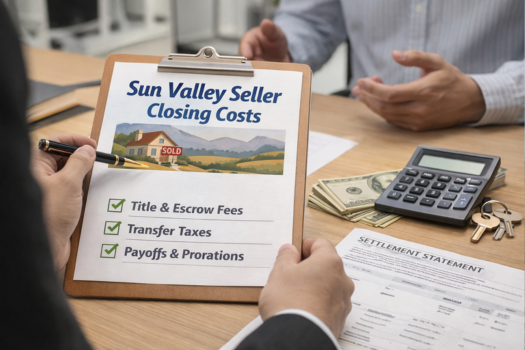
Quick example (for understanding only)
If a home sold for $400,000 and the tax applied, the “$2.05 per $500” rate is about 0.41% of the price. That would be approximately $1,640. (This is a simple illustration and does not replace the title/escrow calculation.)
5) Recording Fees
Recording fees are government charges to officially record documents like the deed. They’re usually smaller than the transfer tax, and the exact amount depends on the number and type of documents recorded. Your escrow statement will show these itemized.
6) Property Tax Prorations in Washoe County
Property taxes are typically prorated so you pay for the portion of the tax period you owned the home. If you’ve already paid an installment for a period that extends beyond your closing date, you may receive a credit. If an installment is coming due shortly after closing, the settlement statement will usually account for that as well.
Washoe County property taxes are billed on a July-to-June tax year and can be paid in installments. Due dates vary by year, so your escrow statement will use the correct schedule and amounts for your parcel.
7) HOA Resale Package and Transfer Charges (If You Have an HOA)
If your Sun Valley property is in an HOA, Nevada law requires sellers to provide the buyer with a resale package. The owner is responsible for obtaining it (and typically paying the associated fees). HOAs may also charge transfer/setup fees and prorate dues at closing.
Common HOA-related items include:
- Resale package fee (sometimes called “resale disclosure” or “demand”)
- Statement or document preparation fees
- Transfer fee (varies by association)
- Prorated HOA dues
8) Loan Payoff, Interest, and Release Fees
If you have a mortgage, escrow will request a payoff amount from your lender. Your payoff commonly includes:
- Remaining principal balance
- Interest through the payoff date
- Any lender processing/reconveyance charges (if applicable)
This is not a “closing cost” you can shop around, but it does affect your final net proceeds.
9) Seller Credits and Negotiated Costs
Some costs are not automatic—they happen only if you agree to them in negotiations. Examples:
- Buyer closing cost credit (a dollar amount you contribute)
- Repair credit instead of completing repairs
- Home warranty (optional; sometimes requested)
- Appraisal gap solutions (if needed, depending on financing and value)
In Sun Valley, these decisions often depend on market conditions, the buyer’s financing type, and how your home compares to competing listings.
How to Estimate Your Net Proceeds (Simple Seller Math)
If you want a quick planning estimate, use this structure:
- Expected sale price
- Minus mortgage payoff (if any)
- Minus seller closing costs (title/escrow/transfer/recording/prorations)
- Minus negotiated credits (if any)
- = estimated net proceeds
Best practice: Ask for a seller net sheet that uses your estimated sale price, your current loan balance, and Washoe County transfer tax to show a realistic range. This makes it easier to plan your move and choose your ideal listing strategy.
Practical Ways to Protect Your Proceeds in Sun Valley
Price strategically from day one
Overpricing can lead to longer market time and bigger concessions later. A strong initial price strategy often reduces the odds of price cuts and heavy credits.
Get ahead of condition issues
Small repairs, a clean home, and clear disclosures can reduce last-minute requests and help keep escrow on track.
Understand what’s “customary” vs. what’s “negotiated”
Some fees are common in Nevada (like transfer tax and title/escrow charges), but who pays which items can be negotiated. The contract controls the final outcome.
Review the settlement statement carefully
Before closing, you’ll receive a statement showing each charge and credit. Reviewing it with your agent helps you understand every line item and catch mistakes early.
Sun Valley Closing Costs Seller: Final Takeaway
Seller closing costs in Sun Valley, Nevada usually include a mix of negotiable items (like concessions and compensation) and standard transaction charges (like title/escrow services, transfer tax, recording fees, and prorations). The details matter—and getting them right protects your bottom line.
Cassie Craig and Paul Dunham with Craig Team Realty can walk you through a clear seller net sheet and a plan tailored to your Sun Valley home. If you want a realistic estimate of your closing costs and proceeds, reach out at (775) 306-7591.
If you’re also thinking about timing and your expected selling timeline, or you want to understand common inspection costs, our team can help you plan the full picture.
For homeowners who want a direct conversation about your options with a local agent—including whether you should list now or wait for the best time—we’re here to help.
And if your main goal is speed, we can discuss strategies to sell fast without losing sight of your net proceeds.
You can also review the overall steps to sell a home in Nevada, and learn what sets our team apart in Sun Valley.
Check out this article next